A Redhill living room that felt cut off from the garden. The solution was a three-panel glazed tilt-and-turn door set fitted in the existing opening — more light, proper ventilation, and a view through to the garden from anywhere in the room.
Three-Panel Glazed Door Installation in Redhill: Tilt-and-Turn Fitted in a Surrey Living Room
The clients in Redhill had a living room that opened onto a south-facing garden — but you wouldn't have known it from inside the house. A solid timber door and a small fixed side panel kept most of the light out and made the garden feel disconnected from the room. They wanted to change that without losing the door or knocking through a full set of bifolds.
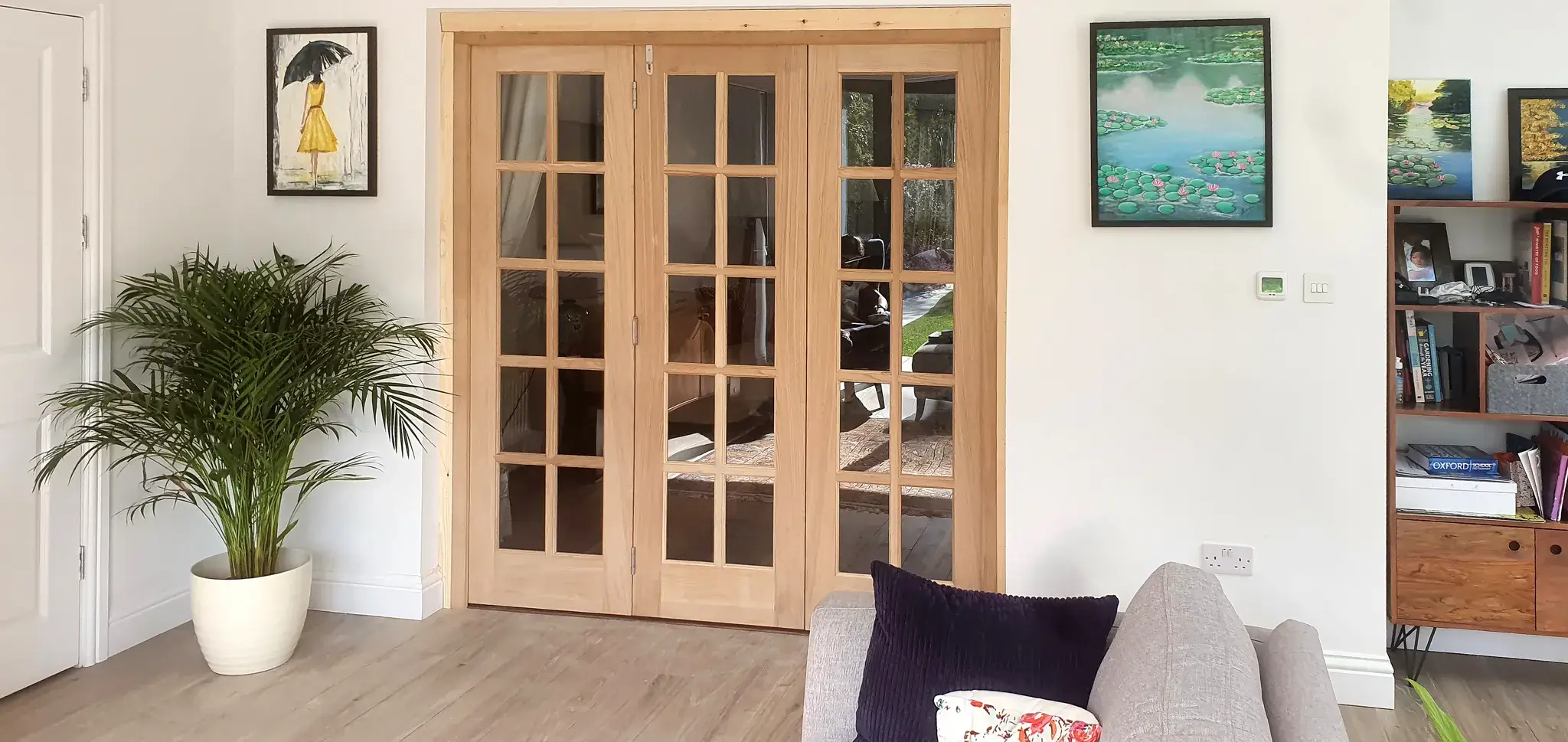
The answer was a three-panel glazed tilt-and-turn door set, fitted into the existing structural opening. One large operating panel with full tilt-and-turn functionality, flanked by two glazed fixed lights. The room now reads as one space with the garden from the moment you walk in.
Why Three Panels Instead of Two or Four
The opening width drove the decision. Too narrow for four panels that would give useful ventilation, too wide for a single door that wouldn't look proportionate. Three panels — one operating door flanked by two fixed lights — filled the opening correctly and kept the sightlines clean.
The operating panel sits in the centre. When tilted at the top, it ventilates the room without fully opening. When turned and pushed open, it gives full access. The two fixed panels don't move but bring in as much light as the operating door — the glass-to-frame ratio on the fixed lights is higher because they carry no hardware.
What Tilt-and-Turn Actually Means — and Why It Matters
Tilt-and-turn is a Continental European mechanism that's become increasingly common in UK homes over the last twenty years. The same handle operates two different opening modes depending on how far you turn it:
- Handle horizontal (90°): The door swings open inward on a vertical axis — like a standard door. Full opening, full access to the outside.
- Handle vertical (180°): The top of the panel tilts inward a few inches. The bottom stays fixed. You get airflow without opening the door fully — useful in rain, useful for overnight ventilation, useful when you want the room aired without the door swinging into furniture.
For a living room opening onto a garden, this flexibility is practical. You don't need full access to the garden every time you want fresh air. The tilt position lets you ventilate the room without leaving a full opening that lets in rain or requires you to move whatever is near the door.
Fitting the Doors in Redhill
The existing opening had a timber sub-frame that needed checking before anything went in. One corner had some movement — not structural, but enough to affect whether the new frame would sit square. We packed it out and re-fixed the sub-frame before the new door set went in.
The door set came as a pre-assembled unit: the three panels already hung in their outer frame. Installation was a morning's work — set the frame, check level and plumb in both directions, fix through the frame into the sub-frame, fill and seal. The mechanism was adjusted on-site once the frame was in its final position.
We checked the tilt function first — it's the more sensitive of the two operating modes and the one that most often needs fine-tuning on the locking points. Then the turn function. Both operated cleanly before we left the site.
Glass and Frame Specification
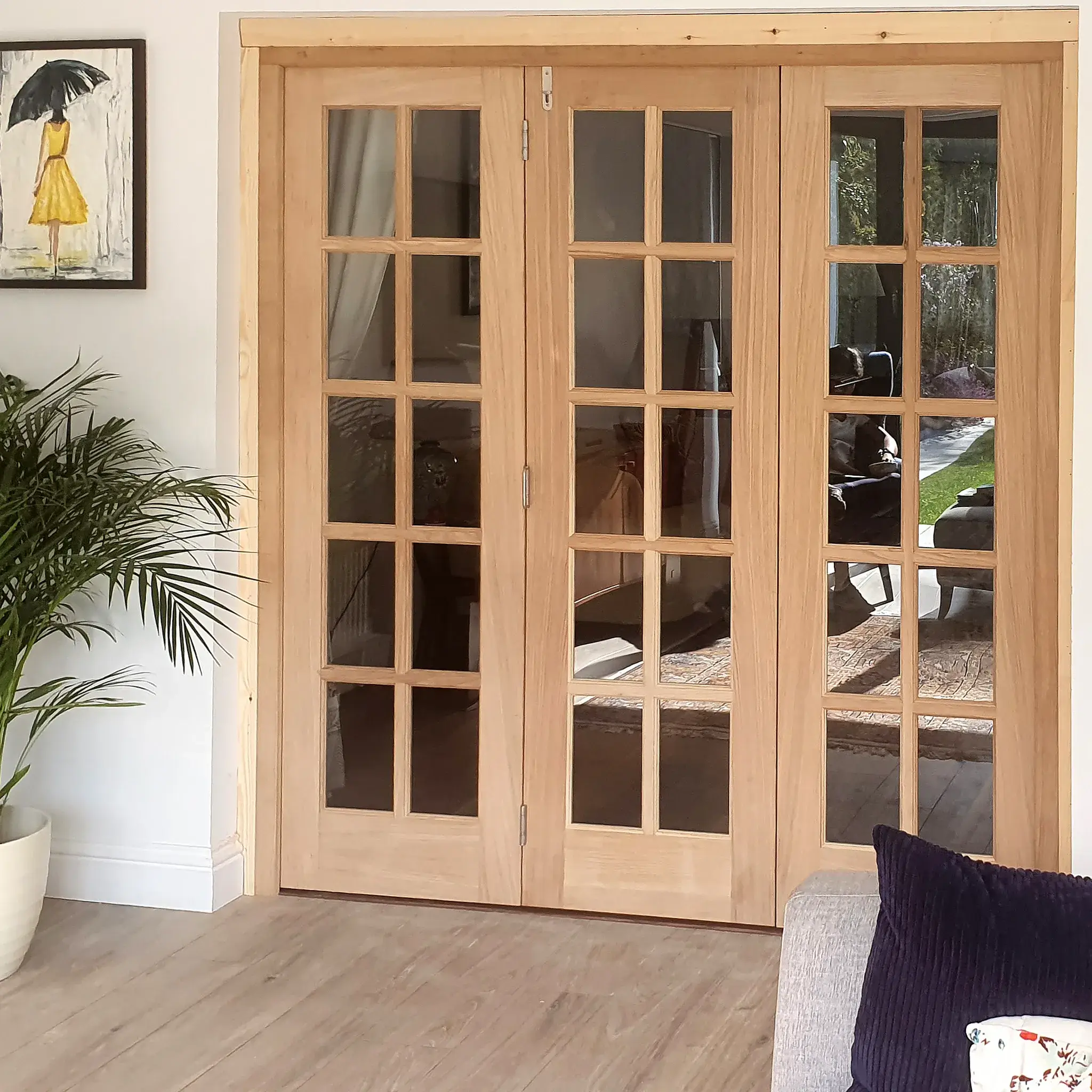
The frame was a white uPVC profile — the clients wanted the sight lines to be as thin as possible without going to aluminium pricing. Modern uPVC profiles have come a long way from the chunky frames of the 1990s; the one used here has a chamfered inner edge that reads as sharper than it is.
The glass was 28mm double-glazed units with a low-E coating on the inner pane. In a south-facing room that gets direct sun in the afternoon, solar control glass would have been the other option — it reduces heat gain but slightly dims the light. The clients preferred maximum light and would manage the heat with blinds if needed.
The Result
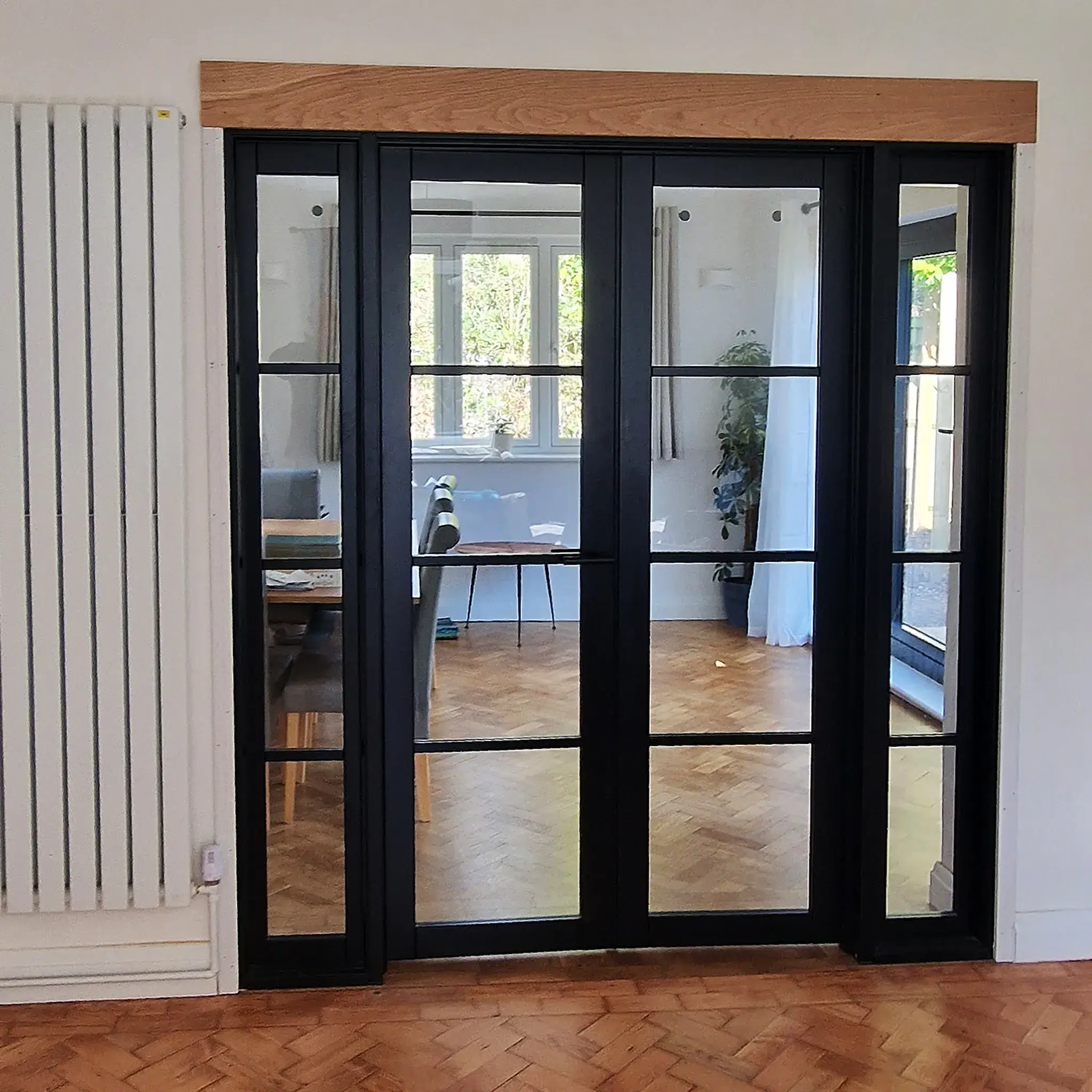
The living room in Redhill now feels twice the size it did before the doors went in. The garden is visible from the kitchen doorway at the other end of the room — something that wasn't possible when a solid door sat in the opening. In the afternoon, the south-facing aspect fills the room with light that reaches the back wall.
The tilt-and-turn function gets used daily. The clients tilt the panel when they're in the room; they turn and open it fully when they're coming in from the garden with hands full. That's exactly what the mechanism is designed for.
Frequently Asked Questions — Glazed Door Installation in Surrey and South London
What is the difference between tilt-and-turn and bifold doors?
Bifold doors fold back in sections along a track, opening most of the wall when fully open. Tilt-and-turn doors open inward on a single panel — you get either tilt ventilation or a full door swing, but not a wide-open wall. Bifolds suit larger openings where you want a seamless indoor-outdoor connection. Tilt-and-turn suits existing doorway openings where you want more glass and better ventilation without structural changes.
Can tilt-and-turn glazed doors be fitted into an existing opening?
Yes — that's the most common scenario. The door set is sized to fit the existing structural opening. As long as the opening is sound and the sub-frame is in good condition, no building work is needed. We check the sub-frame on the first visit and deal with any movement before the new frame goes in.
What glass options are available for glazed living room doors?
Standard double-glazed units (28mm) with a low-E coating are the most common choice. For a south-facing room that gets strong afternoon sun, solar control glass reduces heat gain at the cost of slightly reduced light transmission. Frosted or patterned glass is available for privacy. Toughened glass is standard for any panel at floor level — it's a building regulation requirement for glazing in critical locations.
How long does a three-panel glazed door installation take?
For a door set fitted into an existing opening with a sound sub-frame, one day is typically enough — morning to fit and fix the frame, afternoon to adjust the mechanism and finish the reveals. If the sub-frame needs work, add a half day. Lead time for the door set itself varies by supplier, typically two to four weeks for a made-to-measure unit.
Do you fit glazed doors across Surrey and South London?
Yes — we work across Redhill, Reigate, Sutton, Croydon, Wimbledon and the wider Surrey and South London area. See our windows and doors service page for more on what we cover.
📞 Free measurement and quote: +44 7824 534416 |